
The Career of William Scoresby
The WhaleThis flow traces William Scoresby’s movement from successful Arctic whaler to scientific observer and religious minister.
increasing Bearing strength in each event
 decreasing
Bearing strength in each eventdecreasingA Whaling Inheritance
Learning the Northern Sea
A family trade
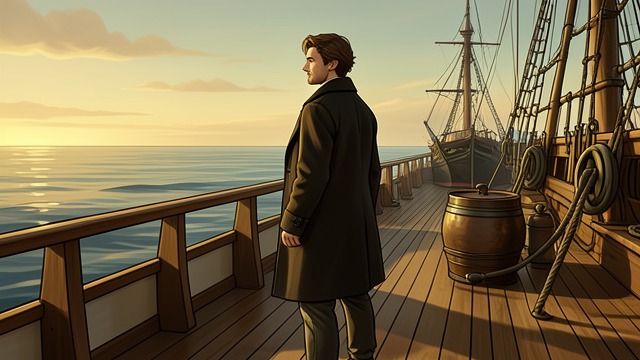
William Scoresby grows up within a whaling world shaped by his father’s experience and the dangers of Arctic voyages. The sea offers both a profession and an inherited model of authority.
Early advancement
He proves effective as a seaman and rises to command. His success gives him access to regions and observations that few people can encounter firsthand.
Commanding the Fleet
A Successful Whaler
Large catches
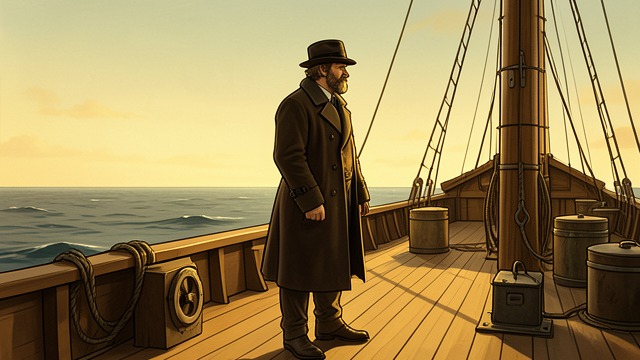
Scoresby commands ships including the Henrietta, the Dundee, and the Resolution. His voyages bring in substantial catches and strengthen his reputation in British Arctic whaling.
A heroic public image
Stories of skill and daring make him a celebrated figure in Whitby. That fame rests on the killing of hundreds of whales, which he understands as legitimate human use of nature.
Science at Sea
Observation and Instrument
Measuring the ocean
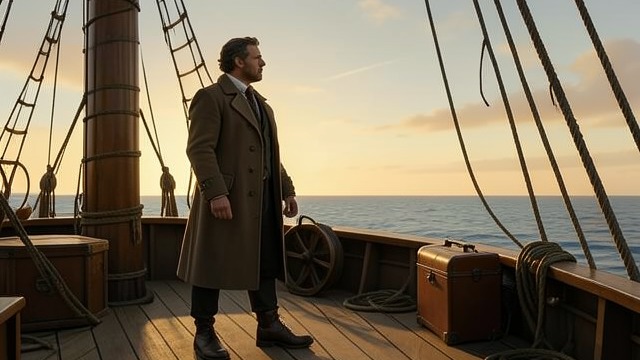
Scoresby investigates sea temperatures and records the conditions of Arctic waters. He uses whaling voyages to support scientific work as well as commercial hunting.
A lasting account
His writing combines observation, geography, and religious interpretation. It gives later readers, including Herman Melville, an important account of whales and the Arctic.
The Stone Lance
A Clue in Blubber
An old weapon
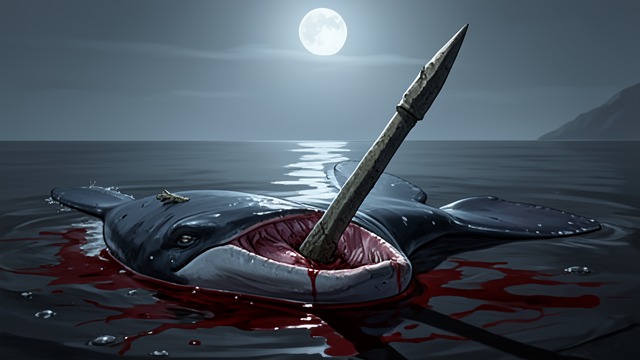
Scoresby learns that a whale carries an embedded stone lance associated with Indigenous hunters. The healed wound suggests that the animal survived a distant encounter long before it was killed.
An unintended discovery
The artefact also hints at a passage between oceans, but its implication for the whale’s age receives less attention. Later discoveries will make this clue central to arguments about bowhead longevity.
Leaving the Sea
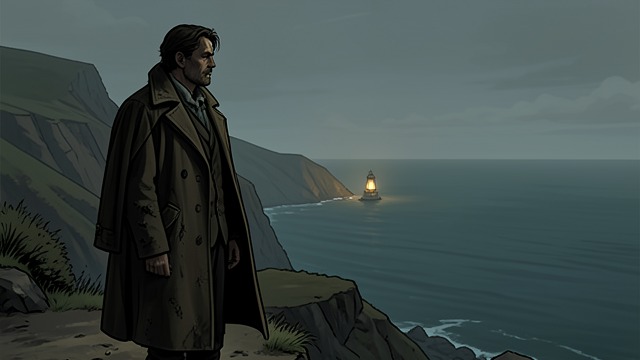
A Change of Calling
Personal loss
After returning from a voyage, Scoresby learns that his wife has died. He makes only one more trip before abandoning the sea.
A new vocation
Scoresby becomes a vicar and turns toward religious and scientific questions. His career leaves a complicated legacy: pioneering observation alongside a confident defence of whaling.
During Scoresby’s youth in Whitby
During the early nineteenth century
On Scoresby’s Arctic voyages before 1820
In July 1813
After Scoresby’s final Arctic voyages
